Imagine discovering a hidden island sanctuary where towering trees shelter winding trails, wildlife roams freely through protected habitats, and families create cherished memories just minutes from suburban homes. You’re not dreaming about distant vacation destinations—you’re experiencing Big Island Nature Park Orono, a remarkable 25-acre natural treasure nestled in Lake Minnetonka that transforms ordinary days into extraordinary outdoor adventures.
Whether you’re seeking peaceful hiking through pristine forests, hoping to spot rare birds in their natural habitats, planning educational nature walks that spark children’s curiosity, or simply craving quiet spaces where modern life’s chaos fades into birdsong and rustling leaves, this island sanctuary delivers experiences that reconnect your soul with nature’s healing rhythms. This unique destination combines wilderness character with convenient accessibility, creating an outdoor haven where stressed adults find peace and energetic children discover the simple joy of exploring wild places.
This guide reveals everything about visiting this island paradise that local families treasure as their secret escape.

Discovering Big Island Nature Park Orono Location
Big Island Nature Park Orono occupies a 25-acre island situated in Lake Minnetonka’s northwestern waters near the city of Orono, Minnesota. This unique location provides visitors with genuine island experiences without requiring boat transportation, as a causeway connects the preserve to mainland Orono, enabling easy vehicle access to parking areas near trailheads.
The preserve sits approximately 20 miles west of downtown Minneapolis, making Big Island Nature Park Orono easily accessible for Twin Cities residents seeking quick nature escapes during lunch breaks, after work, or on weekend mornings before other obligations fill calendars. The convenient location means families can enjoy meaningful outdoor time without dedicating entire days to travel.
Three Rivers Park District manages Big Island Nature Park Orono as part of its extensive regional park system, ensuring professional stewardship that protects ecological integrity while providing visitor amenities and programs. This expert management maintains trail quality, removes invasive species, and offers educational programming that enhances visitor understanding of natural systems.
The island’s geography reflects glacial activity that shaped Minnesota’s landscape thousands of years ago. Ancient ice sheets deposited the soils and carved the lake basin surrounding what would become Big Island Nature Park Orono, creating the diverse terrain supporting today’s rich plant and animal communities.
Natural Features and Ecosystems of the Preserve
The ecological diversity protected within Big Island Nature Park Orono supports varied habitats ranging from mature hardwood forests to wetland areas, each providing homes for different species and creating the biodiversity that makes the preserve scientifically valuable and recreationally engaging.
Forest Communities
Mature oak, maple, and basswood trees dominate the forest canopy at Big Island Nature Park Orono, their spreading branches creating shade beneath which understory plants thrive. These woods represent remnant forests that once covered much of Minnesota before agricultural clearing transformed the landscape.
The forest floor throughout Big Island Nature Park Orono carpets with native wildflowers during spring, including trillium, bloodroot, and hepatica that bloom before tree leaves fully emerge and shade ground layers. These ephemeral flowers provide critical early-season resources for pollinators emerging from winter dormancy.
Wetland Habitats
Wetland areas along shoreline sections of Big Island Nature Park Orono support cattails, bulrushes, and other water-loving plants adapted to fluctuating lake levels. These transitional zones between land and water provide essential habitat for amphibians, waterfowl, and aquatic insects that form crucial links in food webs.
The wetlands at Big Island Nature Park Orono also perform important ecological services including water filtration, shoreline stabilization, and flood mitigation that benefit both wildlife and surrounding human communities dependent on lake health.
Wildlife Populations
White-tailed deer frequently browse through Big Island Nature Park Orono, often visible to quiet hikers during dawn and dusk hours when these animals feed most actively. Fox, raccoon, and other mammals also inhabit the preserve, though their nocturnal habits make sightings less common.
Bird diversity particularly distinguishes Big Island Nature Park Orono from typical suburban parks. Over 100 bird species have been documented, including migratory warblers, woodpeckers, owls, and waterfowl that utilize the varied habitats for nesting, feeding, and resting during seasonal movements.
Hiking Trails Throughout the Preserve
Approximately 3 miles of trails wind through Big Island Nature Park Orono, providing hiking opportunities ranging from short walks perfect for young children to longer loops that challenge fitness enthusiasts seeking quality workouts in natural settings.
Trail System Layout
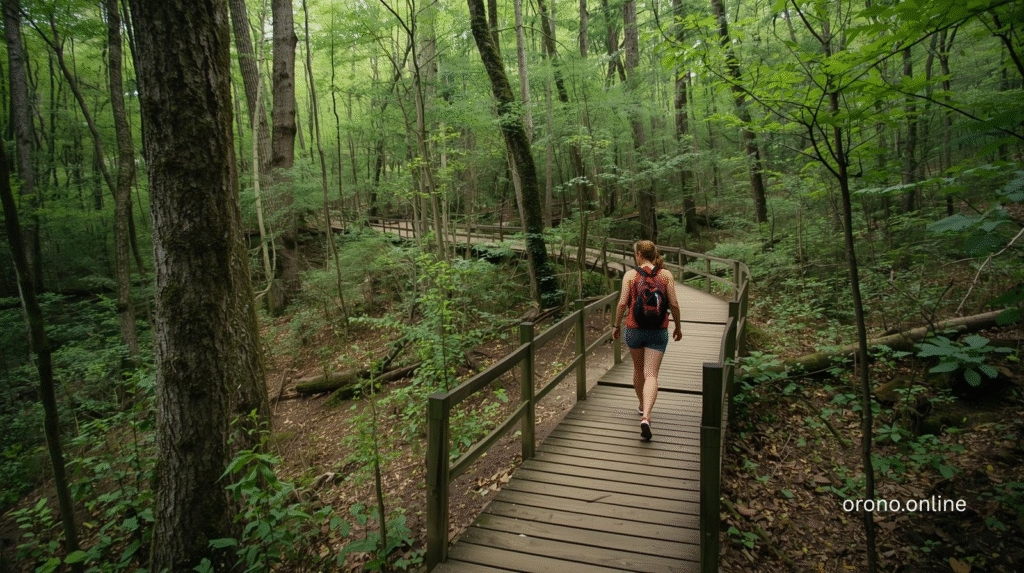
The main trail at Big Island Nature Park Orono circles the island perimeter, offering changing perspectives as you progress from forested sections through wetland boardwalks to shoreline paths with lake views. This variety prevents monotony even during repeated visits, as seasonal changes and varying light conditions create fresh experiences.
Interior trails branch from the perimeter loop at Big Island Nature Park Orono, enabling visitors to customize route lengths and explore different habitat types. Trail intersections feature signage preventing navigation confusion, though the island’s limited size makes getting seriously lost nearly impossible.
Trail Surfaces and Accessibility
Natural surface trails at Big Island Nature Park Orono wind through forests, with packed earth paths occasionally challenged by tree roots and minor elevation changes. These authentic trail conditions appeal to hikers seeking genuine nature experiences rather than manicured park paths.
Boardwalk sections traverse wet areas at Big Island Nature Park Orono, protecting fragile wetland soils while providing dry passage during seasons when trails might otherwise become muddy. These elevated walkways also offer excellent wildlife viewing platforms where patient observers spot frogs, turtles, and water birds.
Seasonal Trail Conditions
Spring visits to Big Island Nature Park Orono reward hikers with wildflower displays and migrating bird activity, though trails may be muddy during snow melt and rain periods. Waterproof boots prove valuable during these months when ground saturation affects trail conditions.
Summer provides the most reliable trail conditions at Big Island Nature Park Orono, with dry paths and full forest canopy offering cooling shade. However, mosquitoes and other insects become more abundant, making insect repellent advisable for comfortable hiking.
Fall transforms Big Island Nature Park Orono into spectacular displays of autumn color as deciduous trees shift to brilliant reds, oranges, and golds. Cooler temperatures and reduced insect activity make autumn ideal for extended hikes through peak foliage.
Winter access to Big Island Nature Park Orono continues via groomed trails perfect for snowshoeing and cross-country skiing. The preserve takes on entirely different character when snow covers the landscape and deciduous trees stand bare, revealing views hidden during leafy seasons.
Wildlife Viewing Opportunities
The protected habitats within Big Island Nature Park Orono attract diverse wildlife populations that provide engaging viewing opportunities for visitors carrying binoculars and exercising patience required for successful animal observation.
Bird Watching Excellence
Over 100 documented bird species make Big Island Nature Park Orono a premier birding destination within the Twin Cities metro area. Spring and fall migrations bring waves of warblers, thrushes, and other species passing through Minnesota between breeding and wintering grounds.
Resident birds at Big Island Nature Park Orono include woodpeckers, chickadees, nuthatches, and owls that remain year-round. These permanent inhabitants become familiar friends to regular visitors who learn their calls, habits, and preferred locations within the preserve.
Waterfowl utilize the shoreline habitats at Big Island Nature Park Orono, with ducks, geese, and herons frequently visible from trail sections skirting wetland areas. Spring brings nesting activity that rewards careful observers with glimpses of family groups teaching young survival skills.

Mammal Sightings
White-tailed deer represent the most commonly observed mammals at Big Island Nature Park Orono, with multiple individuals often visible during single visits. Dawn and dusk hours provide best sighting opportunities, as these crepuscular animals feed most actively during low-light periods.
Red foxes occasionally appear at Big Island Nature Park Orono, though their wariness makes observations less frequent than deer encounters. Patient visitors sitting quietly near field edges sometimes spot these beautiful predators hunting rodents or simply traveling through territories.
Reptile and Amphibian Diversity
Several turtle species inhabit the aquatic habitats at Big Island Nature Park Orono, frequently basking on logs protruding from water during warm sunny days. These reptiles play important ecological roles controlling aquatic vegetation and serving as prey for larger predators.
Frogs and toads chorus during spring breeding seasons at Big Island Nature Park Orono, their calls echoing through wetlands as males advertise for mates. These amphibians indicate healthy water quality, as their permeable skin makes them sensitive to pollution that would drive populations elsewhere.
Educational Programs and Guided Activities
Three Rivers Park District offers programs at Big Island Nature Park Orono throughout the year, providing structured learning opportunities that deepen visitor understanding and appreciation of natural systems.
Naturalist-Led Hikes
Guided walks led by knowledgeable naturalists help visitors discover aspects of Big Island Nature Park Orono they might miss during self-guided explorations. These experts point out subtle features, explain ecological relationships, and answer questions about plants, animals, and natural processes.
Themed hikes at Big Island Nature Park Orono focus on specific topics like bird identification, wildflower ecology, or tracking animal signs. These specialized programs attract participants interested in developing particular nature study skills.
Children’s Programs
Nature education programs at Big Island Nature Park Orono introduce children to outdoor exploration, wildlife observation, and environmental stewardship. These activities combine learning with play, sparking curiosity that often develops into lifelong nature appreciation.
Summer camps use Big Island Nature Park Orono as outdoor classroom where children spend extended time immersed in natural environments. These experiences provide alternative to screen-dominated modern childhoods, building connections to nature increasingly recognized as essential for healthy development.
Photography Workshops
The scenic beauty at Big Island Nature Park Orono attracts photographers seeking subject matter ranging from sweeping landscapes to intimate wildflower portraits. Workshops teach camera techniques while providing instruction on ethical wildlife photography that prioritizes animal welfare over compelling shots.
Seasonal photo opportunities at Big Island Nature Park Orono vary dramatically, with spring wildflowers, summer greenery, fall colors, and winter snow each creating distinct aesthetic possibilities. Regular visitors return throughout years documenting how the preserve changes across seasons.
Conservation and Ecological Management
Protecting the natural values that make Big Island Nature Park Orono special requires ongoing management addressing invasive species, habitat restoration, and balancing public access with ecological protection.
Invasive Species Control
Non-native plants threaten to overwhelm native vegetation at Big Island Nature Park Orono, as they do throughout Minnesota landscapes. Buckthorn, garlic mustard, and other aggressive invaders outcompete native plants, reducing habitat quality for wildlife evolved to depend on indigenous species.
Control efforts at Big Island Nature Park Orono include mechanical removal, prescribed burning, and careful herbicide application targeting invasive populations while minimizing impacts on desirable plants. Volunteers assist professional staff during organized workdays, contributing thousands of hours toward preservation.
Habitat Restoration Projects
Restoration initiatives at Big Island Nature Park Orono aim to recreate historical plant communities that supported greater biodiversity before human alterations changed landscapes. Prairie restoration, wetland enhancement, and forest management all contribute toward this long-term goal.
Success requires patience, as ecosystems develop slowly and setbacks occur when droughts, floods, or pest outbreaks disrupt plans. Despite challenges, visible progress at Big Island Nature Park Orono demonstrates that dedicated effort can reverse some damage and create healthier habitats.
Trail Maintenance and Erosion Control
Heavy foot traffic concentrates impacts along trails at Big Island Nature Park Orono, sometimes causing erosion or vegetation damage requiring intervention. Trail crews install water bars, reinforce tread surfaces, and route paths avoiding sensitive areas vulnerable to trampling.
Boardwalk maintenance proves particularly important at Big Island Nature Park Orono, where elevated walkways traverse wetlands. Regular inspections identify boards requiring replacement before safety hazards develop, ensuring visitor security while protecting fragile soils beneath structures.
Visitor Guidelines and Regulations
Rules at Big Island Nature Park Orono balance public enjoyment with resource protection, ensuring that current visitors have quality experiences while preserving natural values for future generations.
Trail Etiquette
Staying on designated trails at Big Island Nature Park Orono prevents vegetation trampling and soil compaction that degrades habitats. Shortcuts between trail sections cause erosion and destroy plants, even when damage seems minor during individual passes.
Hikers encountering others on narrow trails at Big Island Nature Park Orono should practice courtesy, with uphill travelers typically given right-of-way. Cyclists and runners must yield to walkers, while all users should maintain reasonable speeds preventing collisions.
Wildlife Protection Rules
Feeding wildlife at Big Island Nature Park Orono harms animals by teaching them to associate humans with food, creating dangerous dependencies and aggressive behaviors. Natural diets provide proper nutrition, while human foods often contain unhealthy ingredients causing health problems.
Keeping appropriate distances from wildlife at Big Island Nature Park Orono protects both animals and observers. Approaching too closely causes stress, disrupts natural behaviors, and occasionally provokes defensive reactions that can injure people despite their good intentions.
Leave No Trace Principles
Packing out all trash maintains the pristine conditions that make Big Island Nature Park Orono special. Even organic waste like apple cores should be removed, as these introduce non-native seeds and nutrients that alter ecosystems evolved under different conditions.
Leaving natural objects like rocks, plants, and antlers at Big Island Nature Park Orono ensures future visitors enjoy discoveries and prevents cumulative impacts from thousands of people each taking “just one” item that seems insignificant individually.
Planning Your Visit
Successful trips to Big Island Nature Park Orono require understanding practical details about access, facilities, and seasonal considerations affecting experiences.
Essential Visitor Information:
- Location: Accessed via County Road 19 in Orono, Minnesota
- Hours: Dawn to dusk daily year-round
- Entry Fee: Free admission for all visitors
- Parking: Small lot near trailhead (limited spaces)
- Facilities: Portable toilet at parking area (seasonal)
- Dogs: Allowed on leash
- Bikes: Permitted on trails
Limited parking at Big Island Nature Park Orono means early arrival ensures securing spaces, particularly during peak fall foliage weekends when visitation spikes. Carpooling reduces parking pressures while lowering environmental impacts.
No drinking water or permanent restrooms exist at Big Island Nature Park Orono, so visitors should bring adequate hydration and plan accordingly for longer visits. The lack of facilities reinforces the preserve’s wild character that attracts those seeking authentic nature experiences.
Why Big Island Nature Park Orono Matters
Beyond individual recreation, the preserve serves important ecological and educational functions benefiting broader communities whether people visit regularly or never walk its trails.
The protected habitats at Big Island Nature Park Orono provide refuge for species struggling to survive in surrounding developed landscapes. As urbanization fragments natural areas, such preserves become increasingly critical for maintaining regional biodiversity.
Educational value extends beyond formal programs, as informal learning occurs whenever visitors observe ecological processes, seasonal changes, or wildlife behaviors. These experiences build environmental literacy that influences conservation attitudes and behaviors beyond park boundaries.
The existence of Big Island Nature Park Orono enhances quality of life for nearby residents, whether they visit frequently or simply appreciate knowing wild spaces persist near homes. Property values often reflect proximity to parks, as homebuyers recognize the lifestyle benefits of nearby nature access.
Frequently Asked Questions
Q1: Where is the location?
Big Island Nature Park Orono is located in Orono, Minnesota, accessed via County Road 19 approximately 20 miles west of Minneapolis.
Q2: Is there an entrance fee?
No, Big Island Nature Park Orono offers free admission to all visitors year-round without requiring permits or passes.
Q3: Can you bring dogs?
Yes, leashed dogs are permitted on trails at Big Island Nature Park Orono. Owners must clean up after pets.
Q4: How long are the trails?
Approximately 3 miles of trails wind through Big Island Nature Park Orono, with options for shorter or longer routes.
Q5: Are there facilities available?
Big Island Nature Park Orono has a portable toilet at the parking area seasonally, but no permanent restrooms or water sources.
Q6: What wildlife might you see?
Visitors to Big Island Nature Park Orono may observe deer, foxes, over 100 bird species, turtles, and various amphibians.
Q7: Is it accessible year-round?
Yes, Big Island Nature Park Orono remains open dawn to dusk daily throughout all seasons for hiking, snowshoeing, and skiing.
Q8: Can you swim there?
No, Big Island Nature Park Orono does not have designated swimming areas. The preserve focuses on hiking and nature observation.
Q9: Are bikes allowed?
Yes, bicycles are permitted on trails at Big Island Nature Park Orono, though riders should yield to pedestrians.
Q10: Is parking available?
Yes, a small parking lot serves Big Island Nature Park Orono, though spaces are limited and fill quickly during peak times.