There is a moment every Minnesota lake lover knows well. You pull into a small parking area, step out of the car, and through a gap in the trees you catch your first glimpse of water — still, clear, and catching the morning light in a way that makes everything before this moment feel completely irrelevant.
That moment happens at a lake access point.
Lake access points are the quiet heroes of Minnesota outdoor recreation. They are the entry doors to some of the most beautiful natural experiences this state has to offer — public boat launches, fishing piers, swimming areas, and canoe landings that connect ordinary people to extraordinary water.
Minnesota manages thousands of public water access points across the state, maintained by the Department of Natural Resources and local municipalities to ensure that lakes remain accessible to everyone regardless of income or property ownership.
Whether you are a boater looking for a reliable launch point, an angler seeking productive shore fishing, a family wanting safe swimming, or simply someone who needs to sit beside water and breathe for a while — lake access points exist specifically for you.
This complete guide explores 15 incredible reasons why lake access points deserve a central place in your summer plans this year.

Lake Access Points at a Glance
| Detail | Information |
|---|---|
| Managed By | Minnesota DNR + Local Municipalities |
| Total Access Points | Thousands Statewide |
| Common Features | Boat Ramps, Fishing Piers, Parking, Restrooms |
| Entry Fee | Many Free, Some Require Permits |
| Best Season | Memorial Day through Labor Day |
| Activities | Boating, Fishing, Swimming, Kayaking, Picnicking |
| Accessibility | Many ADA Compliant Facilities Available |
| Best For | Families, Anglers, Boaters, Kayakers, Nature Lovers |
| Reservations | Some Busy Sites Require Advance Booking |
| Information | Minnesota DNR Website and Local Parks Departments |
1. Lake Access Points Give Everyone Equal Access to Water
The most powerful thing about lake access points is what they represent. Minnesota’s lakes are public resources, and lake access points are where that public ownership becomes real and physical.
Without maintained lake access points, Minnesota’s incredible lake system would effectively become private — enjoyed only by those wealthy enough to own shoreline property.
Lake access points change that equation entirely. They are the great equalizer of Minnesota outdoor recreation, the reason a family from an urban apartment can launch a canoe on the same water that borders million-dollar lakefront homes.
That principle — equal access to natural beauty — is worth celebrating every single time you visit a lake access point this summer.
2. Perfect Boat Launch Locations for Every Watercraft
For anyone who owns or rents a boat, lake access points with developed boat ramps are essential infrastructure. A good boat ramp means the difference between a smooth launch and a frustrating experience that starts your lake day on entirely the wrong note.
Well-maintained lake access points feature paved or compacted gravel ramps that accommodate everything from small fishing boats to larger pontoons. Wide lanes allow multiple vehicles to maneuver simultaneously during peak launch periods.
Courtesy docks at many lake access points allow boaters to hold their vessel steady during loading and unloading. These simple structures eliminate one of the most common sources of boat launch frustration completely.
Arriving early on busy summer weekends secures the most convenient parking spots, especially for vehicles with trailers that require extra maneuvering space.
3. Exceptional Shore Fishing Opportunities
You do not need a boat to have a great fishing experience at lake access points. Shore fishing from public access areas is one of the most productive and accessible forms of angling available in Minnesota, and it costs nothing beyond a valid fishing license.
Lake access points position anglers at water entry locations that fish consistently use for feeding and movement. The structural changes created by boat ramps, retaining walls, and dock pilings create fish-holding habitat that experienced shore anglers specifically target.
Early morning and late evening fishing from lake access points produces consistently well across Minnesota. During these periods, fish move shallow and become genuinely catchable from shore without specialized equipment.
Bringing a simple spinning rod, a small tackle box, and a valid Minnesota fishing license to any well-chosen lake access point on a summer morning is one of the most reliably enjoyable outdoor experiences this state offers.
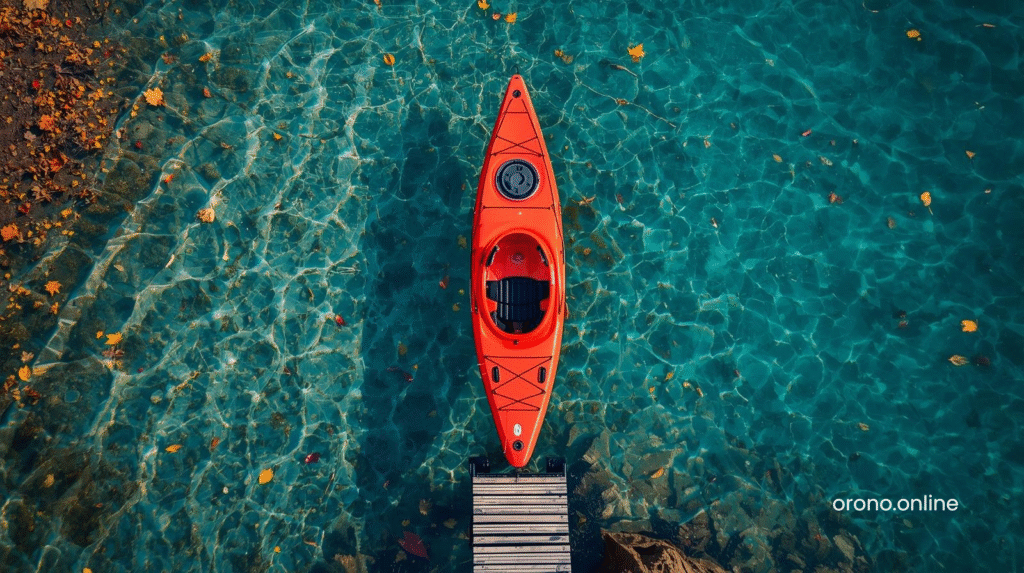
4. Kayakers and Canoeists Depend on Lake Access Points
Human-powered watercraft users — kayakers, canoeists, and paddleboarders — rely on lake access points more than almost any other user group. Without public water access, paddling Minnesota’s interconnected lake and river systems would become impossibly complicated.
Lake access points with gentle, gradual entry slopes are particularly valuable for kayakers and canoeists who need to slide their boats into the water without damaging the hull or struggling against steep rocky banks.
Many Minnesota DNR access points specifically accommodate non-motorized watercraft with designated launch areas separate from motorized boat ramps.
Morning paddling from a quiet lake access point — before the motorized boats arrive and the wind picks up — is one of the most peaceful and genuinely beautiful experiences Minnesota summer has to offer.
5. Families Connect With Nature Without Barriers
For families with young children, lake access points provide something genuinely precious — a low-barrier, high-reward outdoor experience that requires minimal planning and delivers maximum impact on young minds.
Driving to a lake access point, walking to the water’s edge, and spending an afternoon watching minnows, skipping stones, and wading in cool clear water is the kind of simple experience that shapes children’s relationship with nature for their entire lives.
Lake access points remove the logistical barriers that prevent many families from experiencing Minnesota’s lakes. No boat ownership required, no resort reservation needed, no expensive equipment necessary.
Every child who spends an afternoon at a lake access point is a future conservation advocate in the making.
6. Safe, Managed Swimming Access for All Ages
Designated swimming areas at lake access points offer families safe, managed environments for water recreation that unmanaged shoreline locations simply cannot match. Roped swimming zones, gradual sandy entry points, and posted depth markers create conditions where parents can genuinely relax.
Minnesota DNR and local parks departments select swimming access points based on water quality, bottom conditions, and depth profiles that make them genuinely suitable for recreational swimming.
Water quality monitoring at designated swimming access points throughout the summer ensures that posted areas meet health standards that protect visitor wellbeing.
The gradual sandy entry that characterizes the best swimming access points accommodates everyone from toddlers taking first steps into lake water to confident adult swimmers warming up for longer open-water swims.
7. Picnicking at Lake Access Points Is Genuinely Underrated
Many lake access points across Minnesota include picnic facilities — tables, grills, shelter areas, and open lawn spaces — that make them perfect destinations for family outings combining water access with outdoor dining in beautiful natural settings.
A well-packed picnic cooler, a family blanket, and a lake access point with a table beside the water is one of the most affordable and genuinely satisfying summer experiences Minnesota offers.
Reservable picnic shelters at popular lake access points accommodate larger family gatherings that need reliable shade and cooking facilities. Booking these shelters in advance for summer weekends ensures your group has a comfortable base for the entire day.
Children who grow up picnicking at lake access points develop an early and lasting association between natural beauty and family togetherness that shapes their outdoor values for life.
8. Wildlife Observation Rewards Patient Visitors
Lake access points are positioned at the water’s edge — precisely the transitional zone where the greatest density and diversity of wildlife activity occurs. Patient visitors who arrive early, move quietly, and watch carefully are consistently rewarded with encounters that feel genuinely extraordinary.
Great blue herons stand motionless in the shallows at lake access points across Minnesota, waiting with extraordinary patience for fish that will eventually pass within striking distance.
Bald eagles hunt from elevated perches near lake access points on productive fishing lakes throughout the state. Spotting a bald eagle from a public access point never entirely loses its power to inspire genuine awe.
Beaver activity is frequently visible at dawn and dusk near lake access points on smaller Minnesota lakes. These remarkable engineers create habitat that benefits dozens of other species.
9. Sunset Viewing From Lake Access Points Is Spectacular
West-facing lake access points across Minnesota offer some of the most spectacular sunset viewing available anywhere in the upper Midwest. Open water reflects and amplifies the color of the changing sky in ways that land-based viewing simply cannot replicate.
Arriving at a west-facing Minnesota lake access point approximately one hour before sunset, finding a comfortable spot on the bank or a dock, and watching the sky transform through gold, orange, pink, and deep violet over the water requires no equipment and no expense.
It just requires showing up. And consistently showing up for Minnesota sunsets over open water is one of the better habits a person can develop this summer.
10. Lake Access Points Support Invasive Species Management
Every Minnesota lake access point serves an important ecological function — it is a managed entry point where invasive species protocols can be enforced and education can reach the greatest number of water users in the most relevant possible context.
Required boat inspection stations at busy lake access points ensure that watercraft entering lakes are free of aquatic invasive species that have devastated lake ecosystems across Minnesota.
Watercraft decontamination stations at many larger lake access points allow thorough cleaning of boats that may have been exposed to invasive species. Using these stations consistently is one of the most meaningful conservation actions any Minnesota lake user can take.
Clean, drain, and dry signage at lake access points provides constant reminders of the simple practices that protect Minnesota’s lake ecosystems from irreversible damage.
11. Accessible Facilities Welcome Every Visitor
Minnesota has invested significantly in making lake access points genuinely accessible to visitors with mobility limitations, ensuring that reaching the water is not restricted to people who can navigate steep or challenging terrain.
ADA-compliant fishing piers at accessible lake access points extend over the water on level stable decking that accommodates wheelchairs and mobility devices of all types.
Accessible parking spaces positioned close to water entry points, paved pathways from parking to the shoreline, and accessible restroom facilities reflect a genuine commitment to inclusive outdoor recreation.
Accessible fishing equipment loan programs at some lake access points provide adaptive gear that allows anglers with physical limitations to participate fully in one of Minnesota’s most beloved recreational traditions.
12. Outstanding Photography Opportunities Year Round
Lake access points position photographers at the water’s edge — the most dynamic and visually rich zone in the entire landscape. For photographers of any skill level, lake access points offer exceptional material throughout every season.
Dawn arrivals at lake access points during calm weather produce the glassy mirror-flat water surfaces that create the dramatic reflection photographs that define Minnesota lake imagery.
Wildlife photography at lake access points benefits from the consistent presence of herons, eagles, osprey, and waterfowl that are drawn to water access locations where human activity has made them somewhat habituated to quiet observers.
Autumn color photography from lake access points — when surrounding trees turn and their reflection doubles the visual impact — represents some of the most spectacular landscape photography opportunities in the entire upper Midwest.

13. Winter Ice Fishing Access Points Extend the Season
Lake access points in Minnesota are not only summer destinations. When lakes freeze solidly in winter, many access points become the entry point for ice fishing — one of Minnesota’s most beloved cold-weather traditions.
Ice fishing from lake access points requires the same basic infrastructure as summer use — a parking area, a path to the water, and sufficient space for anglers to set up safely.
The social dimension of ice fishing at lake access points is genuinely distinctive. Clusters of portable shelters, the smell of propane heaters, and the quiet camaraderie of people pursuing the same patient hobby in challenging conditions create an atmosphere found nowhere else quite like Minnesota in January.
Year-round use of lake access points reflects the depth of Minnesota’s relationship with its water resources — a relationship that does not pause simply because temperatures drop below freezing.
14. Community Gathering Spaces That Build Real Connections
Beyond their individual recreational functions, lake access points serve as genuine community gathering places where neighbors meet, local knowledge is exchanged, and shared appreciation for Minnesota’s lakes creates bonds between people.
The informal social ecosystem of a busy lake access point on a summer morning — boaters comparing notes on fish activity, families helping each other launch boats, kayakers discussing route options — reflects something genuinely valuable about the culture of public water access.
Community fishing events, youth angling programs, and conservation education activities organized around lake access points engage new generations of water users with the skills and values that sustainable lake recreation requires.
The sense of shared ownership that develops among regular users of specific lake access points creates informal conservation communities that care about and advocate for the protection of their local water resources.
15. Lake Access Points Preserve Minnesota’s Outdoor Heritage
Minnesota’s tradition of public water access reflects generations of deliberate policy decisions, conservation investments, and community advocacy that have protected the public’s right to reach and enjoy natural water resources.
Every lake access point represents a victory — a piece of shoreline secured for public use and protected from private enclosure. The network of access points Minnesotans enjoy today exists because previous generations fought for it and maintained it as a public trust.
When you back your boat down a public ramp, wet your line from a public fishing pier, or sit beside the water at a public lake access point watching the sun go down over a Minnesota lake — you are participating in something that took generations to build.
It deserves to last for generations more.
What to Pack for a Lake Access Point Visit
The Essentials
- High-SPF waterproof sunscreen — apply before leaving home and reapply every two hours
- Multiple towels per person — always more than you think you need
- Plenty of drinking water — summer heat dehydrates faster than most people expect
- Valid Minnesota fishing license if planning to fish — available online through Minnesota DNR
Comfort Items
- Portable beach chairs or a comfortable blanket for shoreline relaxation
- Well-insulated cooler with ice for food and cold drinks throughout the day
- Insect repellent — essential for dawn and dusk visits at many Minnesota lake access points
- Waterproof phone case for capturing memories without risking water damage
Activity Specific Items
- Binoculars for wildlife observation at productive lake access point locations
- Fishing gear appropriate for shore or pier fishing at your chosen access point
- Kayak or canoe if planning human-powered water exploration
- Waterproof sandals for rocky or uneven entry areas at natural access points
LSI Keywords for Lake Access Points
| LSI Keyword | Search Intent | Where to Use |
|---|---|---|
| Minnesota lake access | Navigational | Introduction, Meta |
| Public boat launch Minnesota | Transactional | Boating Section |
| DNR lake access points | Informational | Throughout Article |
| Shore fishing access Minnesota | Informational | Fishing Section |
| Kayak launch points Minnesota | Informational | Kayaking Section |
| Swimming access points Minnesota | Informational | Swimming Section |
| Accessible fishing piers Minnesota | Informational | Accessibility Section |
| Minnesota lake picnic areas | Informational | Picnicking Section |
| Invasive species lake access | Informational | Conservation Section |
| Public water access Minnesota | Informational | Throughout Article |
| Ice fishing access points | Informational | Winter Section |
| Lake access point parking | Transactional | Practical Info |
Protecting Lake Access Points for Future Generations
Every person who uses a Minnesota lake access point shares responsibility for protecting it — not just for their own future visits but for every person who will come after them.
Follow all posted regulations at every lake access point you visit. Clean, drain, and dry your watercraft every single time without exception. Pack out everything you bring in and leave the access point in better condition than you found it.
Report maintenance issues and invasive species observations to the Minnesota DNR so that problems can be addressed before they become serious.
Lake access points belong to everyone. Protect them like they belong to you — because they do.
Conclusion
Lake access points are more than boat ramps and fishing piers. They are the physical embodiment of a principle Minnesota has chosen to honor across generations — that natural water resources belong to everyone, and that everyone deserves a way to reach them.
They are where summer mornings begin with the smell of lake water and the sound of a reel clicking. Where children take their first tentative steps into cold clear water and discover something that will stay with them for life. Where families gather without agenda and remember what actually matters.
So find your nearest lake access point. Pack the car. Drive to the water.
Minnesota is waiting, and summer will be gone before you are ready.
Frequently Asked Questions About Lake Access Points
Q1. What is a lake access point?
A lake access point is a publicly maintained location providing legal access to a lake, typically including a boat ramp, parking area, and sometimes fishing piers and swimming areas.
Q2. Who manages lake access points in Minnesota?
Lake access points are managed by the Minnesota Department of Natural Resources, county parks departments, and local municipal parks authorities.
Q3. Are lake access points free to use in Minnesota?
Many lake access points are free. Some require daily or annual permits, particularly those with developed facilities like restrooms and boat ramps.
Q4. Can I fish from a lake access point without a boat?
Yes. Shore fishing and pier fishing from lake access points is productive and popular throughout Minnesota. A valid fishing license is required for all anglers over sixteen.
Q5. Are lake access points accessible for visitors with disabilities?
Many Minnesota lake access points feature ADA-compliant facilities including accessible parking, paved pathways, accessible fishing piers, and accessible restrooms.
Q6. Can I launch a kayak or canoe at a lake access point?
Yes. Most lake access points accommodate non-motorized watercraft. Some have designated kayak and canoe launch areas separate from motorized boat ramps.
Q7. How do I find lake access points near me in Minnesota?
The Minnesota DNR website provides a comprehensive searchable database of public water access points statewide with locations, facilities, and current conditions.
Q8. What are the invasive species rules at lake access points?
All watercraft must be cleaned, drained, and dried before entering any Minnesota water body. Many access points have inspection stations and decontamination equipment available.
Q9. Can I swim at any lake access point in Minnesota?
Not all lake access points are designated for swimming. Look for access points with marked swimming areas and posted swimming regulations before entering the water.
Q10. Are lake access points open year round in Minnesota?
Many lake access points remain open year round including during winter when they serve as entry points for ice fishing. Check with the managing agency for specific seasonal hours.