Walking through the streets where your grandparents once strolled, discovering the stories behind familiar landmarks, and connecting present-day experiences to centuries-old events creates a profound sense of belonging that transforms a house into a hometown. Orono history isn’t just dates and dusty documents—it’s the living legacy that explains why our community looks, feels, and functions exactly as it does today.
Every building, street name, and community tradition carries hidden stories waiting for curious minds to uncover. That beautiful park where your children play? It was once farmland worked by pioneer families who carved civilization from wilderness. The school building seems historic? It witnessed generations of young minds preparing for futures their ancestors could barely imagine.
This comprehensive guide explores the rich tapestry of history, from indigenous peoples who first inhabited these lands through European settlement, industrial development, educational prominence, and modern transformation into the vibrant community we cherish today. Understanding where we came from helps us appreciate where we’re going.
Indigenous Peoples and Early Orono History Before European Settlement
Long before European explorers arrived, the lands comprising modern Orono belonged to indigenous peoples who hunted, fished, and lived sustainably within these forests and waterways for thousands of years. The Penobscot Nation, part of the larger Wabanaki Confederacy, maintained deep connections to this region, with the Penobscot River serving as their primary transportation corridor and resource base.
These original inhabitants understood the land’s rhythms intimately—when fish runs peaked, where game animals migrated seasonally, which plants provided medicine or sustenance at different times. This accumulated knowledge, passed through generations via oral tradition, enabled thriving communities long before written records documented Orono history.
The rivers and streams flowing through the area provided abundant salmon, sturgeon, and other fish species supporting substantial populations. Hunting territories yielded deer, moose, beaver, and smaller game animals supplementing diets and providing materials for clothing, tools, and shelter construction. Seasonal camps moved throughout the territory, utilizing different resources as they became available.
European contact disrupted these traditional lifeways dramatically, introducing diseases, territorial conflicts, and economic systems fundamentally incompatible with indigenous practices. The Penobscot people faced tremendous pressures as colonization accelerated, yet they maintained their cultural identity and connection to ancestral lands despite overwhelming challenges. Understanding this foundation remains essential to comprehending complete Orono history.
Colonial Settlement and the Founding of Orono History
European settlement marking the documented beginning of Orono history commenced in the late 18th century when pioneers ventured into what was then wilderness territory seeking opportunities in timber, agriculture, and river-powered industries. These hardy settlers faced enormous challenges clearing land, constructing shelters, and establishing subsistence in an environment far from established civilization’s comforts.
The Penobscot River’s powerful currents attracted early entrepreneurs recognizing the potential for water-powered sawmills processing the region’s abundant timber resources. These mills became economic anchors around which communities developed, creating employment opportunities that attracted additional settlers seeking better lives than available in crowded coastal regions or declining agricultural areas.
The name “Orono” itself carries historical significance within Orono history, honoring Chief Joseph Orono of the Penobscot Nation, a respected leader who maintained peaceful relations with European settlers during tumultuous periods marked by conflict elsewhere. This naming choice reflected local settlers’ recognition of indigenous peoples’ prior claims and their desire to acknowledge that heritage even as displacement continued.
Early Orono history records reveal the immense physical labor required to transform wilderness into functioning communities. Settlers cleared forests, constructed roads, built homes and businesses, established farms, and created the infrastructure enabling permanent habitation. Harsh winters, isolation from larger population centers, and limited medical care made survival challenging, with many early families experiencing tragic losses.
Religious institutions emerged early in Orono, with churches serving as both spiritual centers and community gathering places where settlers shared news, celebrated occasions, and supported each other through difficulties. These institutions provided continuity and moral guidance as the community established its identity and values.
Educational Development Central to Orono History
Education has shaped Orono profoundly, with the establishment of educational institutions transforming a small timber town into a vibrant college community. The founding of what would become the University of Maine in 1865 marked a pivotal moment in Orono, creating an institution that would define the community’s character for generations.
University of Maine’s Role in Orono History
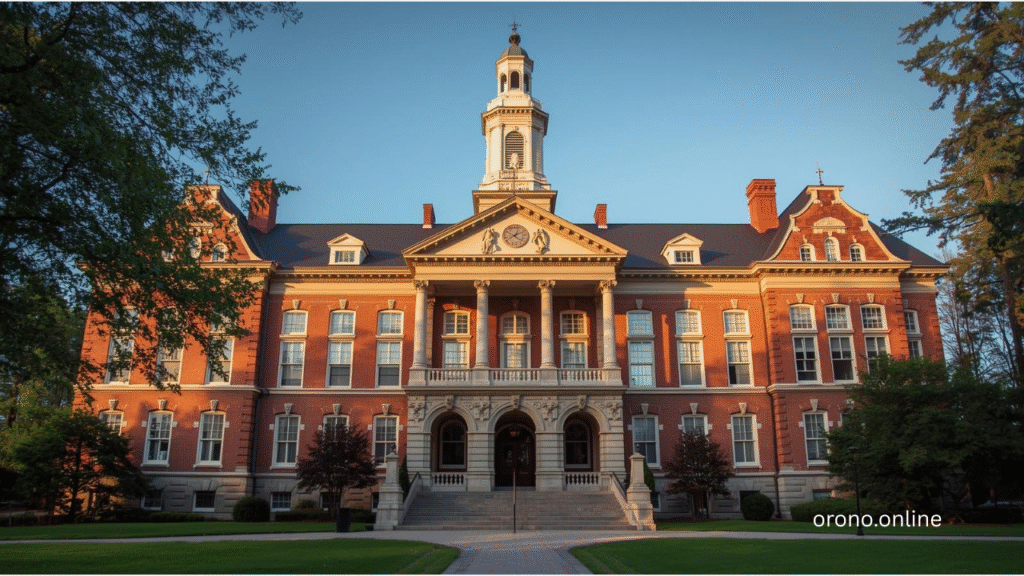
The State of Maine established the State College of Agriculture and the Mechanic Arts in Orono through the Morrill Land Grant Act, which provided federal lands to states for creating colleges focused on agriculture and mechanical arts. This decision to locate the institution in Orono rather than more populated areas reflected both available land and community support for educational development.
Early years proved challenging in Orono , with the institution struggling to attract students, secure funding, and establish academic credibility. Initial enrollment numbered only a few dozen students, mostly young men from Maine farming families seeking practical education applicable to agricultural improvement and industrial development.
The university’s growth paralleled broader developments in Oronoo, with each expansion bringing new faculty, staff, and students who contributed to community economic vitality and cultural enrichment. Boarding houses, restaurants, entertainment venues, and service businesses emerged to serve the growing campus population.
Throughout Orono history, the university-town relationship has experienced both harmony and tension. The institution provides employment, cultural programming, athletic events, and economic stability that small communities typically lack. However, student populations bring noise, parking challenges, rental housing pressures, and seasonal population fluctuations that complicate municipal planning.
Public Schools in Orono History
Beyond higher education, public schools played crucial roles in history by educating generations of children and cementing community identity. Early one-room schoolhouses scattered throughout the area gradually consolidated into larger buildings as transportation improved and educational philosophies emphasized broader curricula requiring specialized teachers.
The quality of public education became a distinguishing feature of Orono, attracting families who prioritized children’s educational opportunities when selecting residential communities. This reputation for educational excellence continues today, with schools remaining primary assets that maintain property values and community desirability.
Economic Development Throughout Orono History
Economic forces have continuously shaped Orono, with different industries rising and falling as technology, markets, and transportation networks evolved over time.
Timber Industry in Early Orono History
The timber industry dominated early history, with vast forests providing seemingly inexhaustible raw materials for sawmills processing lumber shipped down the Penobscot River to coastal markets and beyond. Maine pine commanded premium prices for ship construction, building materials, and export to Europe where timber resources had become depleted.
Logging camps deep in forests employed hundreds of men during winter months when frozen ground enabled heavy log transport to riverbanks. Spring log drives, where lumber floated downstream to mills, represented dangerous, skilled work requiring men who could navigate churning waters while guiding thousands of logs toward their destinations.
The timber boom period in Orono history created substantial wealth for mill owners and merchants while providing employment for workers drawn from across New England and Canada. However, this prosperity proved temporary as forests became depleted and transportation developments shifted competitive advantages toward other regions.
Agricultural Transition in Orono History
As timber resources declined, agriculture gained importance in Orono history. Cleared lands previously supporting forests converted to farms producing dairy products, potatoes, hay, and other crops sustaining local populations and generating export income. Family farms dotted the landscape, with multi-generational operations passing from parents to children.
The university’s agricultural programs significantly impacted farming practices throughout history by introducing scientific approaches to crop management, animal husbandry, and land conservation. Extension services brought university expertise directly to farmers, improving productivity and adapting to changing market conditions.
However, agricultural economics gradually made small Maine farms less viable compared to larger Midwestern operations benefiting from better growing conditions and proximity to processing facilities. Many farms in Orono history eventually ceased operations, with lands either reverting to forest or converting to residential development.
Modern Economic Base in Orono History
Contemporary Orono history reflects a service-based economy centered around the university, healthcare, retail, and professional services. The institution’s $500+ million annual budget supports thousands of jobs directly and indirectly, making it the dominant economic force within the community.
Small businesses along Main Street and surrounding areas provide goods and services to residents, students, and visitors, creating the commercial activity that sustains community vitality. Restaurants, shops, professional offices, and service providers form the diverse economic ecosystem characterizing modern Orono history.
Architectural Heritage Preserved in Orono History
The built environment tells visual stories of Orono history through buildings reflecting different eras’ construction techniques, architectural styles, and community priorities.
Historic Buildings Defining Orono History
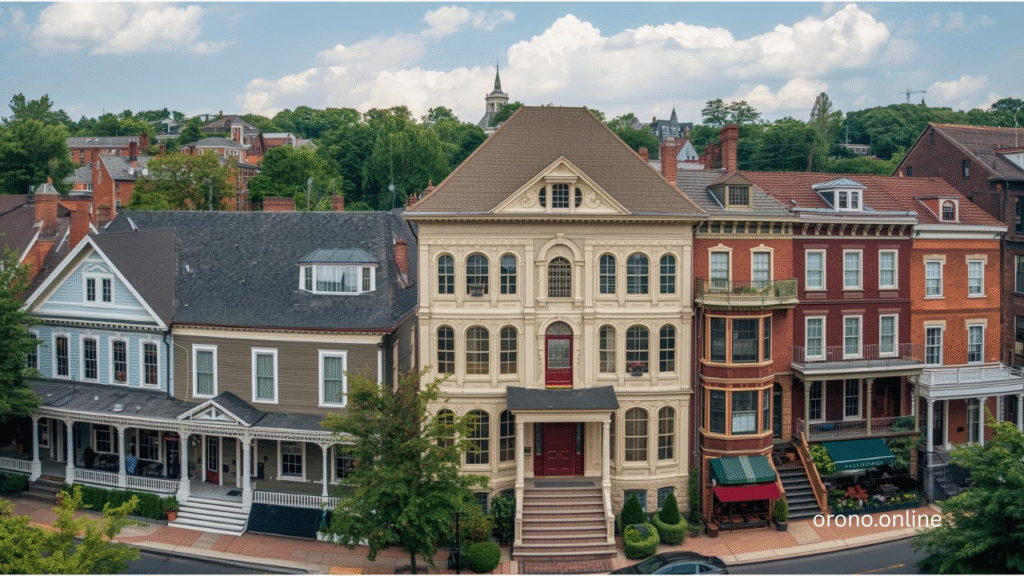
Several structures throughout Orono history have earned recognition for historical and architectural significance. The Orono Public Library, university buildings from various construction periods, and residential structures showcase the evolution of architectural tastes and building technologies across decades.
Greek Revival, Victorian, Colonial Revival, and other architectural styles represented in Orono history reflect broader American building trends adapted to local conditions and preferences. These structures provide tangible connections to past generations who inhabited, worked within, and gathered in these spaces.
Preservation efforts within history face constant challenges as modern needs conflict with historical character protection. Adaptive reuse projects that maintain exterior appearances while updating interiors for contemporary functions represent compromises between preservation and progress.
Residential Architecture in Orono History
Housing stock evolution throughout history mirrors changing family structures, economic conditions, and construction technologies. Early simple structures gave way to more elaborate homes as prosperity increased, while recent decades brought contemporary designs reflecting modern lifestyle preferences.
Neighborhoods from different periods in Orono history display characteristic architecture that dates construction eras and reveals socioeconomic status of original occupants. Grand homes near campus likely housed university administrators or prosperous merchants, while modest structures sheltered working families.
Transportation Development Through Orono History
Transportation infrastructure fundamentally shaped Orono history by determining accessibility, economic opportunities, and community connections to broader regions.
River Transportation in Early Orono History
The Penobscot River served as the primary transportation corridor throughout early Orono history, with boats carrying passengers, goods, and timber to downstream markets. River navigation required skilled pilots familiar with currents, seasonal water level variations, and hazard locations that could damage vessels or trap cargo.
Ferry services at strategic crossing points enabled east-west travel across the river, with operators maintaining boats and charging fees for passenger and wagon transport. These crossings became community gathering points where news exchanged and relationships formed while awaiting passage.
Railroad Era in Orono History
Railroad construction transformed Orono history by providing reliable year-round transportation independent of river conditions. Tracks reaching the community connected local businesses and residents to regional and national networks, enabling both export of local products and import of goods previously unavailable or prohibitively expensive.
The railroad station became a community hub in history, with passenger and freight services bringing visitors, students, mail, and commercial goods. Excitement accompanied train arrivals as residents gathered to greet travelers, collect packages, and participate in the larger world’s connection to their community.
Automobile Age in Orono History
Automobile adoption revolutionised Orono by enabling individual mobility independent of railroad schedules or river navigation. Road construction and improvement became municipal priorities as car ownership expanded, fundamentally changing community spatial organisation and daily life patterns.
Highway development in Orono history opened the community to tourists, facilitated commuting to regional employment centers, and enabled residents to access services and entertainment previously requiring overnight travel. However, automobile dependence also created parking challenges, traffic congestion, and environmental impacts that continue affecting community planning.
Cultural and Social Development in Orono History
Beyond economic and physical infrastructure, cultural institutions and social organizations have enriched community life throughout Orono history.
Civic Organizations in Orono History
Fraternal organizations, service clubs, and civic associations have played important roles in Orono history by providing social connections, organizing community improvements, and supporting charitable causes. These groups brought residents together across economic and social boundaries, fostering community cohesion and collective action.
Women’s clubs held particular significance in Orono history during periods when formal political participation remained restricted. These organizations enabled women to exercise influence through cultural programming, educational initiatives, and charitable work that shaped community character.
Arts and Culture in Orono History
Cultural activities have enriched history through community theater productions, musical performances, art exhibitions, and literary events that elevated community life beyond mere subsistence. The university’s presence provided access to cultural programming that isolated small towns typically lacked.
Libraries emerged early in Orono history as democratic institutions providing educational access regardless of economic status. These repositories of knowledge served students, researchers, and community members seeking information, entertainment, or quiet spaces for reading and reflection.
Orono History Through War and National Events
National events reverberated through Orono history as community members participated in broader American experiences during wartime, economic crises, and social movements.
Military Service in Orono History
Residents have served in every American military conflict since the community’s founding, with Orono history marked by sacrifice, loss, and patriotic service. World War I and World War II particularly impacted the community as substantial percentages of young men departed for military service, leaving gaps in families, businesses, and civic life.
Memorial monuments and ceremonies preserving military service memories occupy important places in Orono history. Veterans’ organizations maintain traditions honoring fallen community members while supporting surviving veterans facing challenges reintegrating into civilian life.
Economic Depressions in Orono History
National economic crises created hardship throughout Orono as unemployment rose, businesses failed, and families struggled to meet basic needs. The Great Depression particularly tested community resilience, though the university’s continued operation provided some economic stability absent in purely industrial communities.
Modern Transformation in Recent Orono History
Recent decades in Orono history have witnessed significant changes as the community adapted to evolving demographics, economic conditions, and societal expectations.
Population Growth in Orono History
Population expansion throughout modern Orono history brought both opportunities and challenges. New residents contributed diverse perspectives, economic resources, and civic energy while also straining infrastructure, schools, and municipal services designed for smaller populations.
Suburban development patterns changed Orono landscape as agricultural lands converted to residential subdivisions. These changes generated property tax revenue supporting municipal services while also raising concerns about character preservation and environmental impacts.
Environmental Awareness in Contemporary Orono History
Growing environmental consciousness marks recent Orono history as residents, students, and officials prioritize sustainability, conservation, and ecological protection. Recycling programs, renewable energy adoption, land conservation efforts, and water quality protection reflect evolving values.
The Penobscot River’s ecological restoration represents a significant chapter in modern history, with dam removals and fish passage improvements reversing historical environmental degradation and enabling native species’ return to traditional habitats.
Frequently Asked Questions About Orono History
Q1: When was Orono founded?
Orono history begins with European settlement in the late 1700s, with official incorporation occurring in 1806.
Q2: Why is it named Orono?
The name honors Chief Joseph Orono of the Penobscot Nation who maintained peaceful relations with early settlers.
Q3: What role did the university play?
University of Maine’s 1865 founding transformed Orono history, creating educational and economic foundation still central today.
Q4: What was the main industry?
Timber industry dominated early Orono history, with sawmills processing vast forest resources for regional and export markets.
Q5: Are there historic buildings?
Yes, Orono history preserves many significant structures including university buildings, homes, and the public library.
Q6: How did transportation evolve?
Orono history progressed from river transportation to railroads to automobiles, each revolution transforming community accessibility.
Q7: What about indigenous peoples?
Penobscot Nation inhabited these lands for thousands of years before European settlement began recorded Orono history.
Q8: Were there notable residents?
Orono history includes numerous distinguished residents including educators, business leaders, and public servants of regional significance.
Q9: How has it changed recently?
Modern Orono history shows residential growth, environmental focus, and continued university expansion shaping community character.
Q10: Where can I learn more?
Orono history resources include the public library, university archives, historical society, and preserved documents at City Hall.