There is a moment after a car accident when everything feels uncertain. The adrenaline is rushing, the situation is confusing, and the immediate priorities of safety and communication take over completely. What most drivers do not think about in those first critical minutes — but absolutely should — is the Minnesota Traffic Accident Report that will become the single most important document in everything that follows.
A Minnesota Traffic Accident Report is the official documented record of what occurred during a traffic accident anywhere in the state of Minnesota. Whether you are involved in a minor fender bender on a quiet Orono residential street or a serious multi-vehicle collision on a busy Twin Cities highway, the Minnesota Traffic Accident Report filed by the responding officer becomes the foundation upon which insurance claims, legal proceedings, medical documentation, and personal records are all built.
Most Minnesota drivers have heard of accident reports. Far fewer actually understand what a Minnesota Traffic Accident Report contains, when officers are required to file one, how to access it after an accident, and how to use it effectively in the processes that follow. This gap between awareness and understanding costs drivers real money, real legal protection, and real peace of mind every single year across the state.
Minnesota roads carry millions of drivers through diverse conditions — harsh winters, busy summer recreation seasons, heavy Twin Cities commuter traffic, and the rural highways that connect communities across one of America’s largest states by area. Accidents happen on all of these roads under all of these conditions, and the Minnesota Traffic Accident Report system exists to document them consistently, professionally, and in a way that serves the legal, insurance, and safety needs of everyone involved.
Whether you have recently been in an accident and need to understand the Minnesota Traffic Accident Report process, you want to be prepared before an accident ever occurs, or you are simply a careful and informed driver who believes that understanding how documentation systems work is part of responsible driving — this complete guide gives you the 10 most incredible and important facts every Minnesota driver needs to know about the Minnesota Traffic Accident Report.
Minnesota Traffic Accident Report at a Glance
| Detail | Information |
|---|---|
| State | Minnesota |
| Filed By | Law Enforcement Officers Statewide |
| Official Name | Minnesota Crash Report |
| Governing Authority | Minnesota Department of Public Safety |
| Public Access | Available Through Official Request |
| Governing Law | Minnesota Government Data Practices Act |
| Common Uses | Insurance Claims, Legal Proceedings, Safety Data |
| Request Method | Law Enforcement Agency or Online Portal |
| Fee | May Apply Depending on Agency and Request |
| Best Resource | Minnesota Department of Public Safety Website |
Fact 1: What a Minnesota Traffic Accident Report Actually Contains
Understanding what a Minnesota Traffic Accident Report actually documents is the essential foundation for using one effectively in any subsequent process.
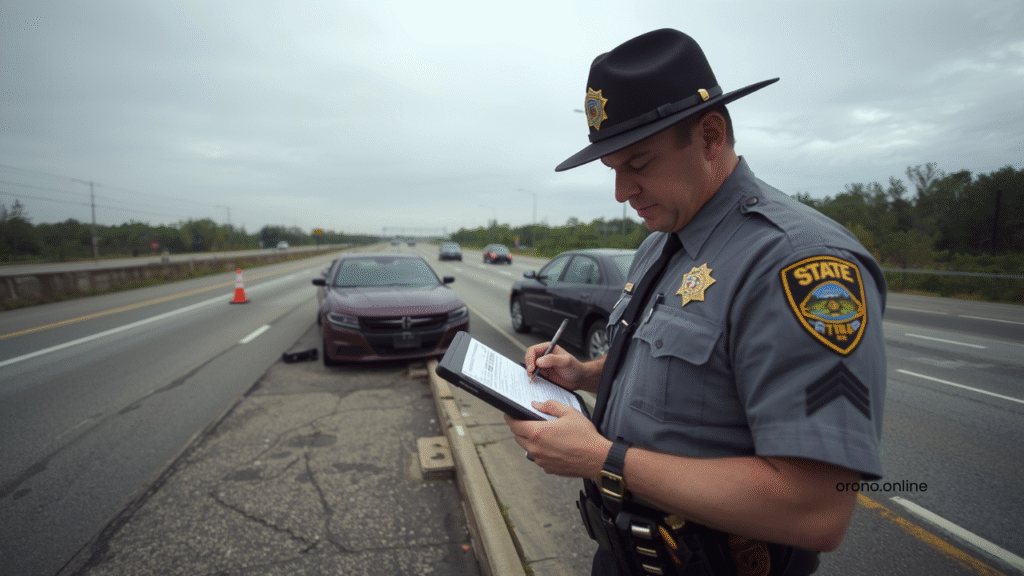
A Minnesota Traffic Accident Report is an official document completed by the law enforcement officer who responds to and investigates a traffic accident. The officer records everything they professionally observe and determine at the scene — the exact location and time of the accident, the vehicles and drivers involved, road and weather conditions at the time of the accident, the sequence of events leading to the collision, visible damage to all vehicles, injuries observed, witness information and statements, and the officer’s professional assessment of contributing factors and fault.
The Minnesota Traffic Accident Report assigns a unique incident number to each accident. This number becomes the essential reference for every subsequent insurance, legal, and administrative process connected to that specific accident.
The report uses standardized Minnesota Department of Public Safety forms and coding systems that ensure consistent documentation across all law enforcement agencies statewide. This standardization makes Minnesota Traffic Accident Report data comparable across jurisdictions and useful for statewide traffic safety analysis.
Fact 2: When a Minnesota Traffic Accident Report Is Required
Not every minor traffic incident automatically results in a Minnesota Traffic Accident Report. Understanding exactly when officers are legally required to file one helps drivers make informed decisions about whether to request official police response after an accident.
Minnesota law requires a Minnesota Traffic Accident Report for all accidents resulting in injury or death to any person involved. Any accident involving property damage meeting or exceeding a specific dollar threshold also requires official documentation. Accidents where any vehicle involved is not drivable after the collision must be documented through a Minnesota Traffic Accident Report regardless of injury status.
When impaired driving is suspected as a contributing factor, a Minnesota Traffic Accident Report is always required regardless of injury or damage levels. The documentation of suspected impairment through the official report process is critical for subsequent criminal proceedings.
For accidents that fall below mandatory reporting thresholds, drivers in Minnesota may file their own report directly with the Minnesota Department of Public Safety. This self-reported Minnesota Traffic Accident Report provides documentation for insurance purposes even when no officer responded to the scene.
Fact 3: How to Request Your Minnesota Traffic Accident Report
Knowing how to efficiently access your Minnesota Traffic Accident Report after an accident is one of the most practically valuable pieces of information any driver can have.
The primary method for requesting a Minnesota Traffic Accident Report is through the law enforcement agency that responded to your accident — the city police department, county sheriff, or Minnesota State Patrol, depending on where the accident occurred and which agency has jurisdiction. Each agency has its own request process, though all are governed by the Minnesota Government Data Practices Act that establishes public access rights to these records.
The Minnesota Department of Public Safety also maintains a statewide crash report database that allows drivers to request copies of Minnesota Traffic Accident Report records through a centralized system. This option is particularly useful when the specific responding agency is unclear or when requesting historical reports for research or legal purposes.
When requesting your Minnesota Traffic Accident Report, providing the incident number assigned at the scene dramatically speeds up the retrieval process. If you do not have this number, providing the date, time, exact location, and names of involved parties allows agency staff to locate the correct report efficiently.
Fact 4: The Minnesota Traffic Accident Report Is Critical for Insurance Claims
The single most common practical reason any Minnesota driver needs to access their Minnesota Traffic Accident Report is the insurance claim process that follows virtually every accident involving significant property damage or personal injury.
Insurance companies across Minnesota rely on the Minnesota Traffic Accident Report as the primary verification document for accident claims. The official report provides independent professional confirmation that the accident occurred, documents the circumstances and parties involved, and establishes the evidentiary foundation that insurers use to determine coverage, liability, and claim value.
Attempting to file an insurance claim without a Minnesota Traffic Accident Report creates substantial risk of claim complication, coverage dispute, or outright denial. Insurance adjusters treating claims without official report documentation are placed in an impossible verification position that consistently produces worse outcomes for claimants.
The incident number from your Minnesota Traffic Accident Report should be provided to your insurance company at the very first contact after the accident and referenced consistently throughout all subsequent claim communications. This single reference number connects every insurance document to the official accident record.
Fact 5: Understanding Fault Determination in the Report
One of the most consequential elements of any Minnesota Traffic Accident Report is the responding officer’s professional determination of fault — their assessment, based on all available evidence at the scene, of which party or parties bear primary responsibility for the accident occurring.
The fault determination documented in a Minnesota Traffic Accident Report carries significant practical weight in insurance claim processing even though it is not legally binding in civil or criminal court proceedings. Insurance adjusters consistently use the officer’s fault assessment as an important independent data point in liability determinations, and it often establishes the starting framework for negotiations between insurance companies representing different parties.
Minnesota is a comparative fault state, meaning that fault can be distributed across multiple parties in proportional percentages rather than assigned entirely to one driver. The Minnesota Traffic Accident Report may reflect this by assigning contributing factors to multiple drivers, which directly affects how insurance liability is ultimately divided.
If you believe the fault determination in your Minnesota Traffic Accident Report does not accurately reflect the evidence available at the scene, consulting legal counsel early in the process is strongly recommended. Correcting or effectively challenging a fault determination requires professional understanding of both the report process and the legal standards that apply.
Fact 6: Minnesota Traffic Accident Reports and Medical Claims
The connection between a Minnesota Traffic Accident Report and subsequent medical treatment and injury claims is one of the most legally significant relationships in all of personal injury law, and one that many accident victims fail to manage properly in the days immediately following their accident.
The Minnesota Traffic Accident Report establishes the official documented occurrence of the accident at a specific time and place with specific parties involved. This documented record provides the essential evidentiary anchor for connecting any subsequent medical condition or injury to the accident event — a connection that is critical for personal injury claims, medical expense recovery, and long-term disability documentation.
Injuries from traffic accidents frequently do not manifest their full severity at the accident scene. Soft tissue injuries, spinal conditions, concussions, and other trauma-related conditions may not produce their most significant symptoms until days or weeks after the collision. The Minnesota Traffic Accident Report creates the documented baseline that connects these delayed-onset injuries to the specific accident event when medical treatment is sought later.
Seeking medical evaluation promptly after any accident involving even minor apparent injury and providing your medical providers with the Minnesota Traffic Accident Report incident number creates the documented chain between your medical condition and the officially recorded event that is essential for any subsequent injury claim.

Fact 7: Digital Access to Minnesota Traffic Accident Reports
The way Minnesota drivers access and use the Minnesota Traffic Accident Report system is evolving rapidly as digital tools and online systems increasingly complement and in some cases replace traditional in-person and mail-based request processes.
The Minnesota Department of Public Safety has developed online systems that allow drivers to access certain categories of Minnesota Traffic Accident Report data without requiring in-person visits to law enforcement agencies. Checking the current digital access capabilities of both the relevant local agency and the state DPS system before deciding how to submit your request can save significant time and effort.
Online request submission portals available through many Minnesota law enforcement agencies allow drivers to initiate Minnesota Traffic Accident Report requests, track request status, and in some cases receive completed reports digitally rather than waiting for paper copies to arrive by mail. These digital efficiency improvements are expanding across agencies throughout the state.
Crime and accident mapping tools that aggregate and visualize Minnesota Traffic Accident Report data statewide are increasingly accessible to community members, researchers, and safety advocates who want to understand accident patterns across specific roads, intersections, or geographic areas.
Fact 8: How Minnesota Traffic Accident Report Data Improves Road Safety
Beyond their value to individual drivers involved in specific accidents, Minnesota Traffic Accident Report data collectively represents one of the most important statewide road safety resources available to transportation planners, engineers, and policymakers.
The Minnesota Department of Transportation and local road authorities systematically analyze patterns in Minnesota Traffic Accident Report data to identify high-risk locations, understand contributing factors in accident clusters, and design targeted safety interventions that address demonstrated risks rather than theoretical ones.
Intersections with recurring collision patterns visible in Minnesota Traffic Accident Report data become candidates for redesign, signal timing adjustments, enhanced signage, or targeted enforcement campaigns. Road segments with accident frequency exceeding statistical expectations trigger engineering reviews that may produce lane configuration changes, surface improvements, or speed limit adjustments.
Every Minnesota Traffic Accident Report filed by every officer responding to every accident across the state contributes to this collective safety intelligence database. The cumulative effect of consistent, professional accident documentation through the Minnesota Traffic Accident Report system is measurably safer roads for all Minnesota drivers over time.
Fact 9: Special Situations in Minnesota Traffic Accident Reporting
Several special circumstances create unique considerations in Minnesota Traffic Accident Report filing and access that every informed driver should understand before they encounter them unexpectedly.
Hit and run accidents require immediate reporting to maximize the possibility of identifying the responsible party and protecting the victim’s insurance rights through uninsured motorist coverage. The Minnesota Traffic Accident Report filed for a hit and run incident documents the victim’s account, any available witness information, and the officer’s investigation findings — creating the official record that insurance companies require for processing claims involving unidentified at-fault drivers.
Accidents involving commercial vehicles, including semi-trucks and other large commercial transportation, involve additional reporting requirements beyond the standard Minnesota Traffic Accident Report, including federal DOT reporting requirements that apply to interstate commercial carriers. Understanding these additional documentation layers is important for anyone involved in an accident with a commercial vehicle.
Accidents occurring on private property — parking lots, private roads, and similar non-public spaces — may not automatically trigger official Minnesota Traffic Accident Report filing even when injuries or significant damage occur. Drivers involved in private property accidents should proactively contact law enforcement to determine whether official reporting applies and consider filing a report themselves if official documentation will be needed for insurance purposes.

Fact 10: Your Rights Under the Minnesota Traffic Accident Report System
The most empowering fact about the Minnesota Traffic Accident Report system is the reality it represents for every driver involved in a traffic accident in Minnesota — you have genuine, legally protected rights to access, review, and use the official documentation of what occurred, and the Minnesota Traffic Accident Report is the primary mechanism through which those rights are exercised.
The right to access the Minnesota Traffic Accident Report for any accident you were involved in. The right to review that report for factual accuracy and request corrections through established processes. The right to use the official documentation in insurance claims, legal proceedings, medical claims, and any other process where the documented facts of the accident are relevant to your interests and legal position.
Understanding and actively exercising these rights through the Minnesota Traffic Accident Report system is not just a technical legal matter — it is a practical self-protection strategy that produces better outcomes in insurance negotiations, legal proceedings, and medical claims for drivers who engage with the system knowledgeably versus those who do not.
What to Do Immediately After an Accident in Minnesota
At the Scene
- Ensure everyone’s safety and call 911 immediately if there are injuries
- Call the nearest law enforcement agency for accidents without injuries that still require documentation
- Exchange driver’s license, insurance, and vehicle registration information with all involved parties
- Document the scene thoroughly with photographs before vehicles are moved if safely possible
- Collect names and contact information from any witnesses present at the scene
After the Scene
- Record the incident number assigned to your Minnesota Traffic Accident Report
- Request your report as soon as it becomes available from the responding agency
- Notify your insurance company promptly and provide the incident number immediately
- Seek medical evaluation without delay if there is any possibility of injury
- Consult a qualified attorney if the accident involves significant injury or disputed liability
LSI Keywords for Minnesota Traffic Accident Report
| LSI Keyword | Search Intent | Where to Use |
|---|---|---|
| Minnesota crash report | Informational | Throughout Article |
| MN accident report request | Transactional | Request Section |
| Minnesota Department of Public Safety accident | Navigational | Throughout Article |
| Minnesota traffic accident documentation | Informational | Insurance Section |
| How to get accident report Minnesota | Transactional | Request Section |
| Minnesota State Patrol accident report | Informational | Throughout Article |
| Minnesota car accident insurance claim | Informational | Insurance Section |
| Minnesota accident report online | Transactional | Digital Section |
| Minnesota road safety data | Informational | Safety Section |
| Hennepin County accident report | Navigational | Local Section |
| Minnesota accident report fault determination | Informational | Fault Section |
| Minnesota traffic crash data | Informational | Safety Data Section |
Conclusion
The Minnesota Traffic Accident Report is one of the most practically important documents in any Minnesota driver’s life — not because accidents are inevitable, but because being prepared for the possibility and understanding the documentation system that follows transforms a potentially overwhelming experience into a manageable one where your rights are protected and your interests are served.
The 10 incredible facts explored in this guide give every Minnesota driver the foundational knowledge needed to understand, access, and use Minnesota Traffic Accident Report documentation effectively — before an accident occurs, in the critical moments immediately after one, and throughout the insurance, legal, and medical processes that follow.
Stay informed. Know your rights. Keep the contact information for your local law enforcement agency accessible.
The best Minnesota Traffic Accident Report is the one that never needs to be filed — but when it does need to be filed, knowing how to use it makes all the difference.
Frequently Asked Questions About Minnesota Traffic Accident Report
Q1. What is a Minnesota Traffic Accident Report?
A Minnesota Traffic Accident Report is an official document filed by a responding law enforcement officer documenting the circumstances, parties, and details of a traffic accident occurring in Minnesota.
Q2. How do I request my Minnesota Traffic Accident Report?
Request your report from the law enforcement agency that responded to your accident or through the Minnesota Department of Public Safety online system. Provide your incident number for fastest processing.
Q3. Is there a fee to obtain a Minnesota Traffic Accident Report?
Fees vary by agency and request type. Check with the responding law enforcement agency or the Minnesota Department of Public Safety for current fee information.
Q4. Do I need a Minnesota Traffic Accident Report for my insurance claim?
Yes. Most insurance companies require official accident report documentation for claims involving property damage or personal injury. Obtain your report before submitting any insurance claim.
Q5. What if my Minnesota Traffic Accident Report contains errors?
Contact the responding law enforcement agency to request correction of factual errors with supporting documentation. Disputed fault determinations may require legal channels to address effectively.
Q6. When is a Minnesota Traffic Accident Report legally required?
Reports are required for accidents involving injury or death, property damage above a specified threshold, vehicles not drivable after collision, and accidents involving suspected impaired driving.
Q7. Can I file my own Minnesota Traffic Accident Report?
Yes. Drivers can self-report accidents directly to the Minnesota Department of Public Safety when no officer responded to the scene, providing important insurance documentation.
Q8. How long does it take for a Minnesota Traffic Accident Report to become available?
Simple property damage reports are typically available within a few days. Reports involving injuries or significant investigation may take longer to complete and finalize.
Q9. Are Minnesota Traffic Accident Reports used in court proceedings?
Yes. Minnesota Traffic Accident Reports are regularly used in civil and criminal legal proceedings. Consult an attorney about how your specific report may be used in any legal process.
Q10. How does Minnesota Traffic Accident Report data improve road safety?
Transportation authorities analyze statewide Minnesota Traffic Accident Report patterns to identify high-risk locations and design targeted safety improvements including intersection redesigns and enforcement campaigns.