There is a moment after a car accident when time seems to slow down and the mind races in several directions at once. Is everyone okay? What just happened? What do I do next? In that moment of confusion and adrenaline, most people focus entirely on the immediate physical situation — checking for injuries, moving vehicles if safe, calling for help. What very few people think about in those first critical minutes is the document that will matter most in the days, weeks, and sometimes months that follow: the official Orono Accident Reports.
Orono Accident Reports are the official documented record of traffic accidents that occur within the City of Orono and are investigated by the Orono Police Department. They are among the most practically important public documents that any Orono driver, passenger, or property owner may ever need to access — yet most residents know almost nothing about Orono Accident Reports until they suddenly and urgently need one.
Orono sits in a community that takes road safety seriously. The residential streets that wind through beautiful Lake Minnetonka neighborhoods, the commuter routes that carry residents to and from the Twin Cities, and the seasonal traffic patterns that summer recreation brings to the area all create a driving environment that requires attention, care, and awareness. Accidents happen even in safe communities, and when they do, Orono Accident Reports become the foundation upon which insurance claims, legal proceedings, medical documentation, and personal records are all built.
Whether you have recently been involved in an accident in Orono and need to understand how to access and use Orono Accident Reports, you want to understand your rights before an accident ever occurs, or you are simply a careful and informed driver who believes that understanding documentation systems around traffic safety is part of responsible community membership — this complete guide covers the 15 most important things every Orono driver needs to know.
Orono Accident Reports at a Glance
| Detail | Information |
|---|---|
| Jurisdiction | City of Orono, Minnesota |
| Filed By | Orono Police Department Officers |
| Report Type | Traffic Accident / Crash Report |
| Public Access | Available Through Official Request |
| Governing Law | Minnesota Government Data Practices Act |
| Request Method | Orono Police Department / City Website |
| Common Uses | Insurance Claims, Legal Proceedings, Records |
| Fee | May Apply Depending on Request Type |
| Timeline | Available After Officer Completes Report |
| Best Resource | City of Orono Official Website |
1. What Orono Accident Reports Actually Are
Before understanding how to use Orono Accident Reports, it is essential to understand precisely what they are and what information they contain.
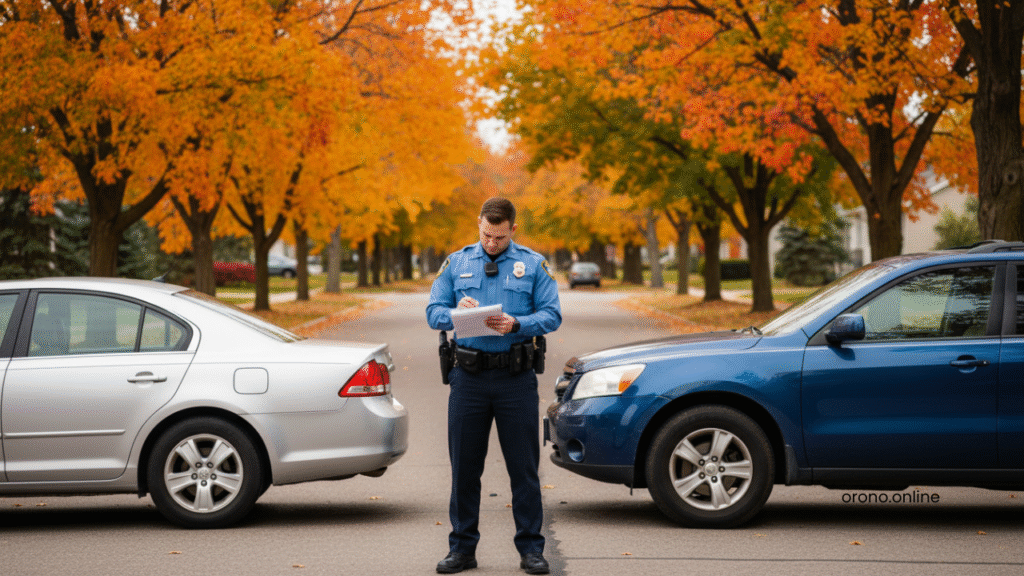
Orono Accident Reports are official documents created by Orono Police Department officers who respond to and investigate traffic accidents within the city’s jurisdiction. The officer documents everything observed at the scene — vehicle positions, road conditions, weather conditions, visible damage, witness statements, driver statements, and their professional assessment of how the accident occurred.
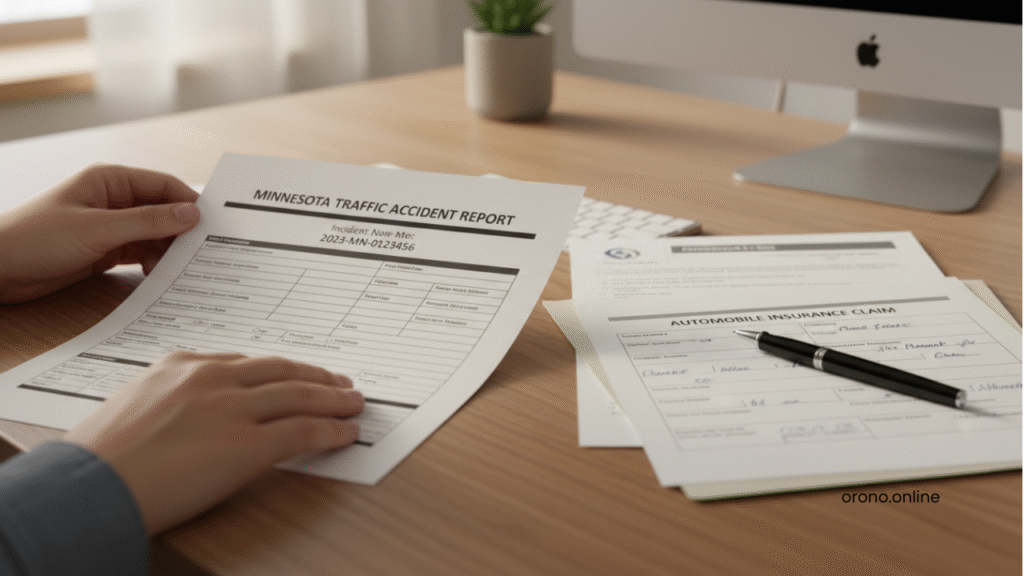
Orono Accident Reports assign each accident a unique incident number that serves as the official reference for all subsequent insurance, legal, and administrative processes. This number is your most important reference when accessing the report afterward.
Understanding that Orono Accident Reports represent the official, professionally observed record of what happened — not just one party’s account — is the foundation of using them effectively.
2. When Officers File Orono Accident Reports
Not every minor collision in Orono automatically results in official Orono Accident Reports. Understanding when officers are required to file reports helps drivers make informed decisions about requesting official police response after an accident.
Minnesota law requires officers to file Orono Accident Reports for accidents involving injury or death, accidents involving significant property damage above a specified threshold, accidents where vehicles are not drivable after the collision, and accidents where any driver appears impaired by alcohol or drugs.
For minor accidents involving minimal property damage and no injuries, officers may respond without filing full Orono Accident Reports. Drivers should still exchange all relevant information and may choose to file a report themselves at the Orono Police Department if documentation will be valuable for insurance purposes.
When in doubt about whether an accident warrants official Orono Accident Reports, calling the non-emergency line allows dispatch to advise on whether an officer needs to respond.
3. How to Request Orono Accident Reports
Knowing how to access Orono Accident Reports efficiently is one of the most practically valuable pieces of information any involved party can have after an accident.
The most straightforward way to request Orono Accident Reports is through the Orono Police Department directly — either in person at the department, by written request submitted by mail, or through any online request portal the City of Orono currently operates. The City of Orono official website is always the most current and reliable source for specific request procedures and applicable fees.
When submitting your request for Orono Accident Reports, providing the incident number assigned at the scene makes the search and retrieval process significantly faster. If you do not have the incident number, providing the date, time, and location allows department staff to locate the correct report.
Allow sufficient time for the officer who responded to your accident to complete and submit Orono Accident Reports before requesting your copy.
4. Orono Accident Reports Are Essential for Insurance Claims
The single most common practical reason any Orono driver needs to access Orono Accident Reports is the insurance claim process that follows accidents involving meaningful property damage or personal injury.
Insurance companies rely on Orono Accident Reports as the primary documentation source for claim verification. The official report confirms that the accident actually occurred, provides an independent professional assessment of how it happened, documents the vehicles and drivers involved, and establishes the official record that underpins coverage determinations.
Submitting an insurance claim without Orono Accident Reports creates significant risk of claim complications, coverage disputes, or denial. Having your report in hand before contacting your insurance company puts you in the strongest possible position from the very beginning of the claims process.
The incident number from Orono Accident Reports should be provided to your insurance company immediately upon making your claim.
5. The Officer’s Fault Assessment in Orono Accident Reports Matters
One of the most consequential pieces of information contained in Orono Accident Reports is the responding officer’s professional assessment of fault — their determination, based on physical evidence, witness accounts, driver statements, and professional experience, of which party bears responsibility for the accident.
This fault assessment in Orono Accident Reports is not legally binding in subsequent civil or criminal proceedings, but it carries significant practical weight in insurance claim processing. Insurance adjusters typically review the officer’s fault assessment as an independent professional evaluation, and it often forms the starting point for coverage negotiations between insurance companies.
If you believe the fault assessment in your Orono Accident Reports is incorrect — based on evidence or witness accounts not fully considered — understanding the process for requesting review is important. Consult legal counsel if the assessment significantly misrepresents what occurred and may affect your insurance or legal outcomes.
6. Witness Information in Orono Accident Reports Is Invaluable
Orono Accident Reports that contain witness information — names, contact details, and initial statements from people who observed the accident — represent some of the most valuable documentation available for any subsequent legal or insurance process.
Witnesses provide independent accounts that carry significant credibility precisely because they have no personal stake in the outcome. Insurance adjusters and attorneys take witness statements in Orono Accident Reports seriously, and their accounts can be decisive in contested liability situations.
At the accident scene, if physically able to do so, ensuring that responding officers are aware of witnesses present significantly increases the value of the resulting Orono Accident Reports. If witnesses leave before officers arrive, having their contact information yourself gives you the ability to provide it to your insurance company and legal counsel independently.
7. Medical Documentation Connects to Orono Accident Reports
For accidents involving personal injury, the connection between Orono Accident Reports and subsequent medical documentation is critically important for protecting both your health and your legal and financial interests.
Orono Accident Reports establish the documented occurrence of the accident at a specific time, place, and with specific parties involved. This documented record provides the essential foundation for any medical treatment, disability, or personal injury claim that develops from accident-related injuries, including injuries whose full severity may not become apparent until days or weeks after the accident.
Seeking medical evaluation promptly after any accident and ensuring that your medical providers are aware of the Orono Accident Reports incident number creates a documented chain connecting your medical condition to the officially recorded accident. This connection is essential for any personal injury claim.
8. Legal Proceedings Depend on Orono Accident Reports
When traffic accidents in Orono result in legal proceedings — whether criminal charges against an impaired driver, civil litigation between parties disputing liability, or administrative proceedings — Orono Accident Reports become central evidentiary documents that courts and legal professionals examine carefully.
The accuracy and completeness of Orono Accident Reports becomes particularly important in legal contexts. Details that might seem minor in an insurance context — precise vehicle positions, exact times, specific road conditions — can become significant in legal proceedings where they are subject to professional scrutiny and cross-examination.
If you anticipate that your accident may lead to legal proceedings, consulting with an attorney before accessing and reviewing Orono Accident Reports is strongly recommended. An experienced personal injury or traffic law attorney can help you understand what the report contains and develop an effective legal strategy.
9. How to Read Orono Accident Reports
Receiving Orono Accident Reports and being able to use them effectively requires understanding the standard format and terminology that Minnesota police accident reports use — efficient for professional law enforcement use but not always intuitive for civilians reading reports for the first time.
Orono Accident Report use standardized codes and abbreviations for vehicle types, accident types, road conditions, contributing circumstances, and other documented factors. A reference guide to these codes is available through the Minnesota Department of Public Safety or from the Orono Police Department.
The narrative section of Orono Accident Report, where the officer describes what occurred in their own words, is typically the most immediately readable portion. Reading this section carefully and comparing it against your own recollection of events is the most important step in evaluating whether the report accurately reflects what occurred.
10. Correcting Errors in Orono Accident Reports
Orono Accident Reports, like all human-created documents, can contain errors. Vehicle identification information, driver details, insurance information, or factual descriptions of the accident sequence may occasionally be recorded incorrectly, particularly in the immediate aftermath of complex accident scenes.
Understanding that errors in Orono Accident Reports can be corrected — and knowing how to request those corrections promptly — is important for anyone whose report contains information that does not accurately reflect the facts of their accident.
The process for requesting corrections to Orono Accident Reports typically involves contacting the Orono Police Department, identifying the specific error, and providing documentation or evidence supporting the correction. Simple factual errors involving vehicle or driver information are generally correctable through a straightforward administrative process.
Disputed interpretive content in Orono Accident Reports — such as the officer’s fault assessment — typically requires legal channels if it significantly affects your insurance or legal position.
11. Multiple Parties Can Request Orono Accident Reports
An important practical fact about Orono Accident Report is that multiple parties involved in the same accident can independently request and access the same report. Understanding this helps all parties approach the post-accident documentation process with appropriate awareness.
Both drivers involved in an accident have the right to access Orono Accident Reports. Their respective insurance companies can request the report as part of claim investigation. Attorneys representing any party in subsequent legal proceedings can access Orono Accident Reports through appropriate legal channels.
This means that the content of your Orono Accident Reports will likely be reviewed by professionals representing interests that may be adverse to yours. Reviewing your own report carefully before it becomes subject to professional scrutiny by opposing interests is a basic protective measure every involved party should take.
12. Orono Accident Reports Inform Community Road Safety
Beyond their value to individual drivers, Orono Accident Reports collectively represent a significant community resource — an ongoing record of where accidents occur, under what conditions, and with what frequency that can inform targeted road safety improvements throughout Orono.
Patterns visible across multiple Orono Accident Reports — intersections with recurring collision frequency, road segments where accident rates exceed community averages, weather or time-of-day factors that consistently correlate with accident occurrence — provide actionable data for city planners, traffic engineers, and the Orono Police Department.
Speed limit adjustments, intersection redesigns, enhanced signage, targeted enforcement campaigns, and road surface improvements can all be informed by patterns in Orono Accident Report data. When these evidence-based improvements are implemented, they reduce accident frequency and severity for all community members.
13. Hit and Run Accidents Require Immediate Orono Accident Reports
Among all categories of accidents documented in Orono Accident Report, hit and run incidents require particularly prompt and thorough reporting by victims to maximize the possibility of identifying the responsible party and protecting insurance rights.
If you are the victim of a hit and run accident in Orono — whether your vehicle is struck while parked, you are involved in a moving collision and the other driver flees, or your property is damaged by an unidentified vehicle — calling the Orono Police Department immediately and providing as much detail as possible maximizes the possibility of identification.
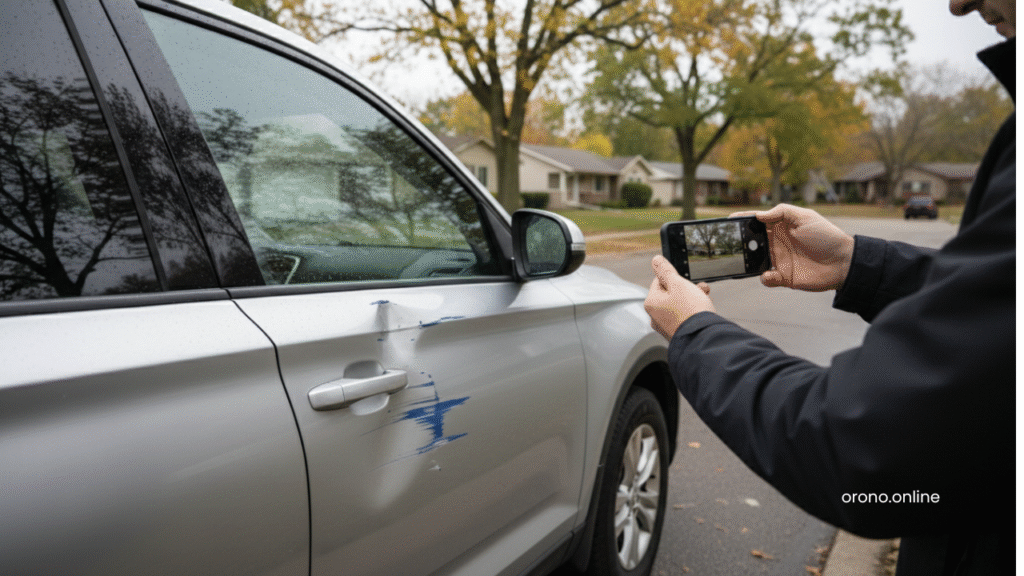
Orono Accident Report filed for hit and run incidents are typically required by insurance companies to process claims under uninsured motorist coverage. Without official Orono Accident Report documenting that a hit and run occurred, uninsured motorist coverage claims are significantly more difficult to process successfully.
14. Seasonal Patterns Visible in Orono Accident Reports
Understanding where and when accidents most commonly occur in Orono — through patterns visible across Orono Accident Reports — gives drivers practical information they can use to make safer driving decisions on the specific roads they travel most frequently.
Summer months in Orono bring increased traffic volumes as Lake Minnetonka recreation draws visitors and seasonal residents to roads that may experience significantly higher traffic than their design anticipated. This seasonal traffic increase corresponds with higher accident frequency on certain routes visible in Orono Accident Reports, particularly those connecting recreational destinations.
Winter driving conditions on Orono roads — ice, snow, reduced visibility, and the particular challenges of Minnesota winter weather — create accident risk patterns visible in Orono Accident Report that differ significantly from summer conditions. Understanding which road segments and intersections have histories of winter accidents helps drivers apply appropriate caution.
15. Your Rights Are Protected Through Orono Accident Reports
The final and most empowering fact about Orono Accident Reports is the broader reality they represent: you have genuine rights as a driver, passenger, or property owner involved in a traffic accident in Orono, and Orono Accident Reports are one of the most important tools available for protecting those rights.
The right to access official documentation of what occurred. The right to review Orono Accident Reports for accuracy and seek corrections of factual errors. The right to use the official record in insurance claims, legal proceedings, and any other process where the documented facts of the accident are relevant. These rights are real, they are yours, and they are worth knowing and exercising.
Understanding Orono Accident Report what they contain, how to access them, how to read them, and how to use them effectively — is one of the most practical forms of self-advocacy available to any Orono driver. Knowledge of your rights and the systems that exist through Orono Accident Reports to document and protect them is the foundation of effective action after any accident.
What to Do Immediately After an Accident in Orono
At the Scene
- Ensure everyone’s safety and call 911 if there are injuries
- Call the Orono Police Department non-emergency line for accidents without injuries
- Exchange driver’s license, insurance, and vehicle registration information with all involved parties
- Document the scene with photographs before vehicles are moved if safely possible
- Note the names and contact information of any witnesses present
After the Scene
- Record the incident number assigned to your Orono Accident Reports
- Request your report as soon as it becomes available
- Notify your insurance company promptly with the incident number
- Seek medical evaluation if there is any possibility of injury
- Consult an attorney if the accident involves significant injury or disputed liability
LSI Keywords for Orono Accident Reports
| LSI Keyword | Search Intent | Where to Use |
|---|---|---|
| Orono Minnesota accident report | Navigational | Introduction, Meta |
| Orono police crash report | Informational | Throughout Article |
| Minnesota accident report request | Transactional | Request Section |
| Orono traffic accident report | Informational | Throughout Article |
| Minnesota Government Data Practices | Informational | Legal Section |
| Orono car accident documentation | Informational | Insurance Section |
| How to get accident report Minnesota | Transactional | Request Section |
| Orono police department reports | Navigational | Throughout Article |
| Minnesota crash report insurance | Informational | Insurance Section |
| Orono road safety | Informational | Safety Section |
| Traffic accident report Hennepin County | Informational | Throughout Article |
| Orono accident report online | Transactional | Digital Section |
Conclusion
Orono Accident Report are among the most practically important documents any Orono driver may ever need to access. They are the official, professionally created record of what occurred in a traffic accident — the foundation of insurance claims, the evidence base for legal proceedings, and the community resource that informs ongoing road safety improvements throughout Orono.
The 15 amazing things explored in this guide give every Orono driver the knowledge they need to understand, access, and use Orono Accident Reports effectively — before an accident occurs, in the immediate aftermath of one, and throughout the subsequent processes that follow.
Stay informed. Know your rights. Keep the Orono Police Department contact information accessible.
The best Orono Accident Reports are the ones that never need to be filed — but when they do, knowing how to use them makes all the difference.
Frequently Asked Questions About Orono Accident Reports
Q1. How do I get a copy of Orono Accident Reports?
Request your report through the Orono Police Department in person, by written request, or through any online portal on the City of Orono official website. Provide your incident number for fastest processing.
Q2. How long does it take for Orono Accident Reports to be available?
Simple property damage reports may be available within a few days. Reports involving injuries or significant investigation may take longer to finalize.
Q3. Is there a fee to obtain Orono Accident Reports?
Fees may apply depending on request type and volume. Check with the Orono Police Department or City of Orono website for current fee information.
Q4. Do I need Orono Accident Reports for my insurance claim?
Yes. Most insurance companies require official Orono Accident Reports for claims involving property damage or personal injury. Always obtain your report before submitting an insurance claim.
Q5. What if Orono Accident Reports contain errors?
Contact the Orono Police Department to request correction of factual errors with supporting documentation. Disputed interpretive content may require legal channels to address.
Q6. Can I access another driver’s Orono Accident Reports?
Reports involving accidents you were party to are accessible to all involved parties. Reports involving accidents you were not party to may have restricted access depending on the information involved.
Q7. What should I do if the other driver fled the scene?
Call the Orono Police Department immediately and provide as much detail as possible. Official Orono Accident Reports filed for hit and run incidents are typically required for uninsured motorist insurance claims.
Q8. Are Orono Accident Reports admissible in court?
Orono Accident Report are regularly used in legal proceedings. Consult with an attorney about how the specific content of your report may be used in any legal process.
Q9. How do I find accident history at a specific Orono location?
Request historical incident data from the Orono Police Department for specific locations using patterns visible in Orono Accident Reports.
Q10. What information should I collect at an accident scene?
Collect the other driver’s license, insurance, and registration information. Photograph the scene and damage. Note witness contact information. Record the incident number assigned to your Orono Accident Report.